

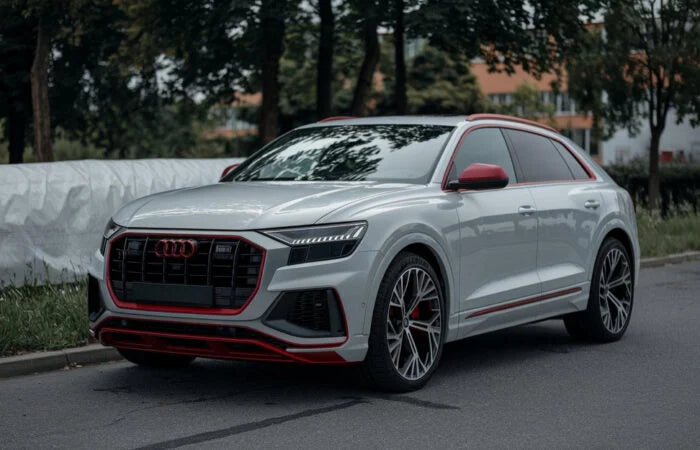
tuning can make your car faster, sleeker and more unique – but there are rules. In the Netherlands, you’re allowed to modify your car, provided it’s safe, doesn’t exceed the MOT standards, and you report any changes to the RDW and your insurer where necessary.
In short: tuning is allowed, but not everything and not without limits.
What are you allowed to tune?
✔️ Software (chip tuning)
Chip tuning is permitted, provided that emission standards and safety requirements are not exceeded. You are obliged to report this to your insurer and – in the case of significant increases in power – sometimes also to the RDW.
✔️ Intake and exhaust systems
Sports air filters and performance exhausts are permitted, provided they remain within noise limits and do not trigger fault codes.
✔️ Wheels and tyres
: You may modify these provided the dimensions remain within the permitted limits and the wheels do not protrude beyond the bodywork.
✔️ Lighting (restricted)
LED lighting is permitted provided it has type approval. Coloured or flashing lights on the exterior are prohibited.
✔️ Suspension and ride height
Coilover kits or lowering springs are permitted as long as the car remains safe: sufficient ground clearance, correct ride height and stable wheel alignment are mandatory. The car must be able to drive over speed bumps without any problems.
✔️ Bodywork and interior
Wraps, spoilers, sports seats or customised steering wheels are permitted, provided they do not affect visibility or safety.
What are you not allowed to modify (or only with restrictions)?
❌ Removal of the catalytic converter, particulate filter or EGR
This is prohibited and will result in the vehicle failing its MOT. Software that disables these systems is also illegal.
❌ Excessively loud exhausts
A sporty sound is permitted, but the exhaust system must remain within the legal noise limits.
❌ Bright or coloured lights
Blue, red or flashing lights at the front are permitted exclusively for emergency services.
❌ Number plate and speed-concealing systems
Retractable number plates, speed camera tape or jammer devices are prohibited.
Do you need to report modifications?
Yes, you must always notify your insurer. In the case of major technical modifications – such as changes to engine power, chassis modifications or engine replacements – you must also notify the RDW. If you fail to do so, you may encounter problems in the event of damage, during a vehicle inspection or at a police check.
Advice from JT-Products
JT-Products isn’t a tuning company, but we provide advice every day on safe and legal performance upgrades. These include air intakes, intercoolers, fuel systems, brakes and chassis components. We’re happy to help you work out what’s permitted, what works well and what remains within the law.
